Mental practice (and creativity)
How imagining doing something can be (almost) just as good as actually doing it
Many moons ago, I was preparing for a piano exam.
Reader, I was a wreck, to the point where the morning of the day of the exam I was so anxious I ate an entire pack of sweet biscuits, one after the other.
A few months before the exam I was sick (not biscuit-related!) and ended up spending a few days in bed. Of course, this meant no piano practice, the thought of sitting up too much, let alone sitting at the piano.
But even now (all these moons later) I remember lying in bed and thinking about one of the pieces in particular. I imagined myself playing it over and over again, the notes running through my head as if I were really hearing them and really playing them.
It turns out that I was still practicing, mentally practicing, to be exact, even if I didn’t touch a single key, and even if I never thought about it that way at the time.
And, yes, I did pass the exam, all those biscuits notwithstanding!
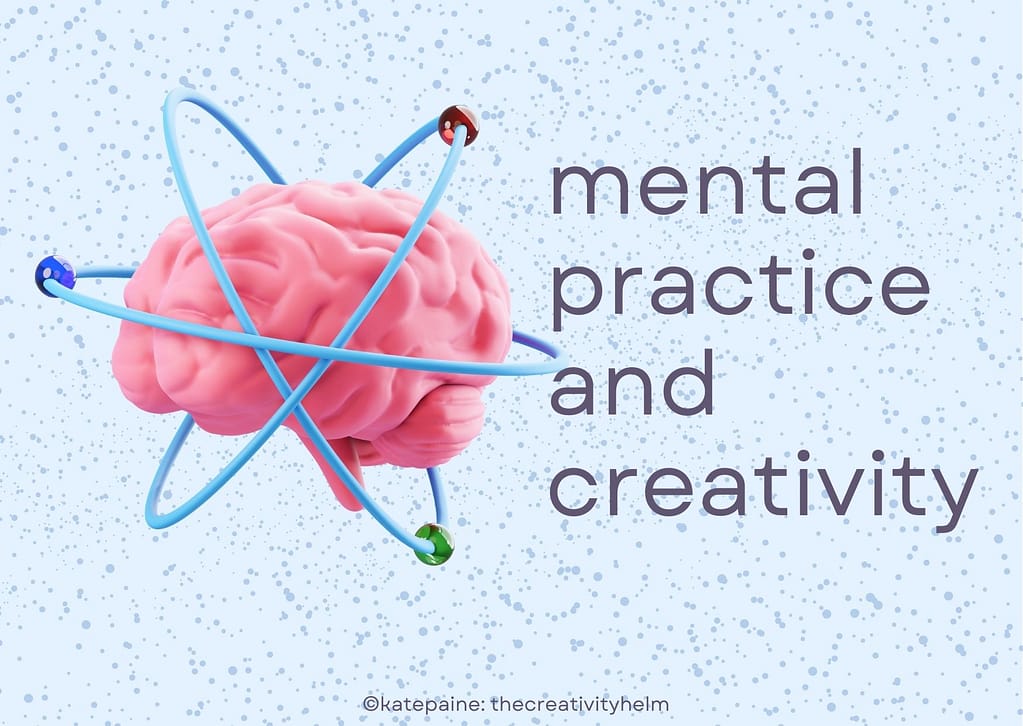
What is mental practice?
When we imagine doing something, especially a physical or sensory activity such as piano, drawing, dancing, or a sporting activity, our brains activate similar areas to those we use when we actually do whatever it is. The same muscles are activated, too, even if it doesn’t seem as if they’re doing anything at all.
The technical term for this is mental practice or mental rehearsal. It’s already a longstanding technique used by, for example, athletes, musicians, artists, and surgeons.
It’s also proven to be incredibly beneficial as a form of therapy for stroke patients and in other kinds of rehabilitation.
Mental practice and music
You definitely don’t have to be an experienced musician to try this out or to reap the benefits. Nor do you have to be able to read music. You just need to pick a song or a piece of music with which you’re already familiar.
Here are a few things to keep in mind:
- if you usually read music notes when you play, you can try picturing them while you’re imagining the song or piece of music, but it’s also great to try imagining the piece of music without picturing the notes.
- if you’re playing an instrument, you can picture your fingers or simply imagine how it feels when you play. Try to hear the music and feel the way it moves from one note to the next.
- if you’re imagining yourself singing, try to imagine how the different parts of your body feel as you sing and breathe, as you move higher and lower.
- the more you do it the easier it will become to both get started and keep going.
- you’ll be able to practice on the bus 😉
Mental practice and creativity
What if we think of mental practice and imagination as the first act of creativity, like an inner rehearsal or inner preparation?
It obviously works with music and sport so why not any creative act, no matter what it is, and no matter how big or small?
Thinking this way reframes creativity as starting before we put anything on paper, play our first note, or take our first step. Creativity so often starts in our imaginations long before we actually do it for real. And this invisible part of the process is just as important as the actual doing.
It also takes the pressure off feeling like we have to take action straight away and that you immediately have to have something tangible to show for your efforts.
But you can also use mental practice at any stage of creating something. The more you do it, the more you’ll see how it can become a very integral part of the creative process.
The first step is to allow yourself to step back from whatever it is you’re creating. Go for a walk, pat the cat, do whatever you like, and let your imagination take over.
Imagination isn’t a warm-up for creativity. Sometimes, it is the act of creation (or at least the start).
Just ask teenage Kate, lying in bed and playing the piano in her head.


0 Comments