The Creativity Helm newsletter

Don’t think you’re creative?
Well, join me each week for stories, music principles (no experience needed), and simple steps you can take right away.
Every week I write about creativity, stripping away the smoke and mirrors to show you the real deal, and revealing the creative patterns that shape everything you do, musical or otherwise.
And I promise you this newsletter will not only change your mind, but also help you reconnect with your true creative self.
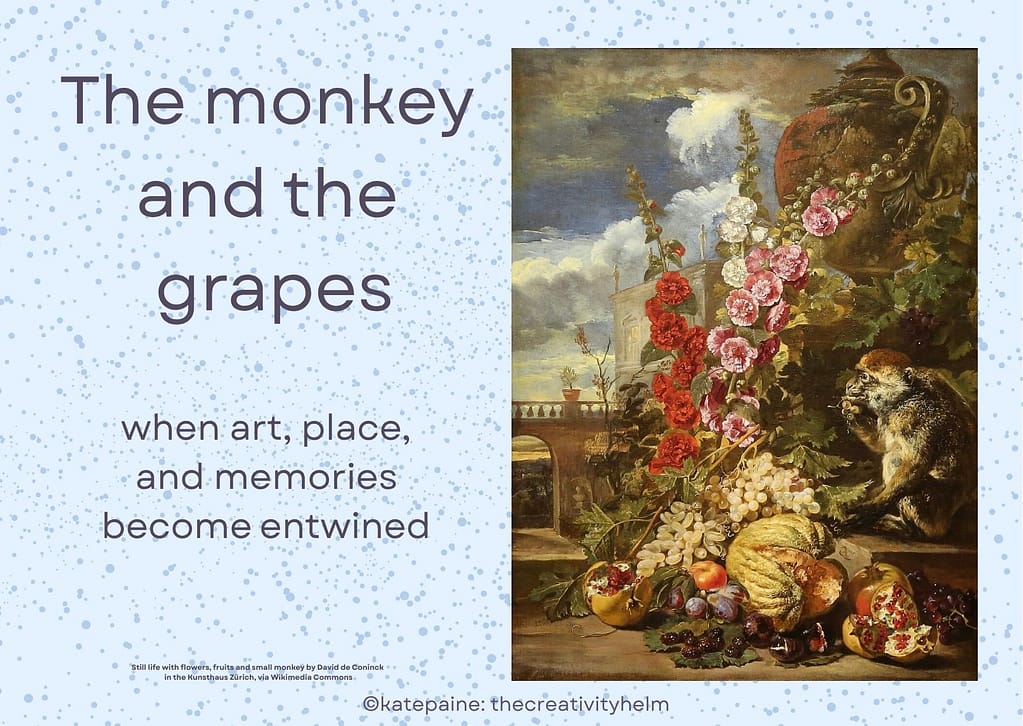
The main Zurich art museum was our safe haven when my daughter was tiny and we were new to Switzerland. Hand-in-hand up those stairs to the monkey and the grapes, then on to the sleeping horse. A destination for those endless afternoon hours of toddlerhood. Now, here I am again.No sticky hand in mine, no high voice asking questions, no fingers stretching out to touch. Maybe I’ll invite my now fully grown girl to come here with me again, and we’ll stand shoulder to shoulder, if not always eye to eye. This week’s newsletter is about how art and memories entwine, turning a museum into a Time Machine.
I sit down at the piano, play a chord I like, and then try something different. It’s a gloriously unpredictable process and, occasionally, in the middle of all that uncertainty, something gives me the chills. Chances are I’ll never be able to play whatever it was the same way again. But it was there, and I’ll remember the feeling, if not the notes. This week I’m writing about goosebumps, creativity, and why the best moments are so often the ones you didn’t see coming.
My Kindle has about 1700 books on it and it always weighs exactly the same, whether there’s one book on it or a thousand. The same is true of people and the invisible library of ideas each of us has in our head. From fragments of music, sentences that stuck, half-remembered conversations, to things that moved you for reasons you couldn’t quite explain. This week’s newsletter is about that invisible library, and why creativity is about trusting what’s already there as much as coming up with something new.
When my daughter was little I made up songs because it was fun and I loved seeing her face when I sang to her. At the same time ‘Mozart effect’ had parents everywhere playing classical music to their babies in the hope of making them smarter and more creative. New research suggests babies don’t need a head start at all. Our brains may arrive in the world already tuned to rhythm, play, and creativity.This week’s newsletter looks at what this means for all those adults who don’t think they have a creative bone in their body.
When I was in grade five, my teacher Mr Jones taught us the most effective way to use coloured pencils. Start very lightly, he said, because once you’ve gone too dark you can’t go back to light again. It’s the difference between steering your creation and just letting it happen. His words often come back to me when I’m teaching students about light and shade in music and creativity. And this week’s newsletter is about how his advice still influences how I take responsibility for the trajectory of everything I create.
The temptation when someone asks me to play or sing something is to dive straight in. Too often I’m halfway through the first melody before realising, even as I’m playing, that it’s too fast, too loud, too something. And it’s also too late. This week’s newsletter is about how I’ve learnt to pause before the first note or the first step, and why taking a moment before you begin can transform the way you create.
I have a habit of playing far too many notes when I first sit down to create something at the piano. They spill from my fingers and fall into my lap like crumbs. The urge to fill every gap is strong, as if more notes mean more certainty, as if I can control the outcome simply by adding enough. This week’s Creativity Helm newsletter is about what creativity looks like before it’s finished.
We’ve been watching the ice skating. Comfortable couch, peppermint tea, watching with awe as they glide, twirl, jump, pirouette, spin…and fall. When they fall we scream and cover our eyes. But they’re usually up again, often with the next breath, back into their routines as if nothing happened. This week’s Creativity Helm newsletter is about how that ability to move on from a fall is exactly what I work on with my music students, and why creative confidence isn’t about avoiding mistakes but about trusting you can stand up again when they happen.
When my brother and I were kids we had a Humpty Dumpty game. Big blue plastic blocks and a cheerful Humpty. Build a wall, place Humpty on top, take turns removing bricks until he falls off. These days I talk to my students about brick walls a lot, but this time it’s to do with building them instead of knocking them down. This week’s Creativity Helm newsletter is about building music and creativity one brick at a time, and how agency appears when you choose what to work on and how.
He bursts through my door, up the stairs two at a time despite my protests. ‘Kate, I practiced it slowly, just like you said, and it worked!’ We high five, do a little dance, and get on with the piano lesson, but inside I’m buzzing. Students think the goal is to play as fast as possible, like a race to the end. But when that’s the goal, there’s no room for choice. This week’s newsletter is about the power of slowing down, no matter what you’re creating, and allowing space for skill, confidence, and creativity to grow.
There are many times when nothing goes right at the piano. My fingers fumble, thoughts intrude like little hammers, my brain refuses to cooperate. When I was a kid, this wave of frustration would sometimes end with me slamming my hands down on the keys in a childish rage. Porridge music, my mother used to call it. This week’s newsletter is about frustration, uncertainty, and what it means to be creative and human.
I teach an engineer who applies everything he’s learnt about structures and systems to playing piano, and it works brilliantly. He’s confident making creative leaps because he knows the structure is sound, and if he falls it won’t be very far. It’s like building a bridge and knowing it will carry your weight when you dance across it. And when you trip or fall. This week’s newsletter is about how structure helps creativity.
When I realised that giant cowbells clanging at 5am on New Year’s Eve were not part of my dream but coming from outside my window, I wasn’t happy. Welcome to Switzerland, a land of ritual, custom, history, superstition, and noise. But there’s something magical about witnessing a tradition dating back to Celtic times that will keep happening whether or not I’m here to see it. How’s that for a powerful and ongoing act of creativity?
‘Dashing through the snow, you, too!’ My three-year-old daughter’s embellished lyrics, for our first homemade Christmas songs, seventeen years ago. We’re still going strong, and this year I found ‘Christmas for Cowboys’ in a 1981 Reader’s Digest songbook. This week’s Creativity Helm newsletter is about creative permission: you have my full permission to pretend to be a cowboy. Go to the newsletter to hear my version of Christmas for Cowboys 🐎
I grew up singing Silent Night in Australia. Now my students in Switzerland are recording their own versions. It’s as English as they come to me, but around the world it’s sung in German, French, Finnish, and so many other languages. Translation shifts meaning, has different emotional colours, different emphasis, different cultural memories and meanings. This week’s newsletter explores how being creative is so inherently human. And read on to hear my version on piano
Right now I’m so immersed in Christmas music with my students (be gone, Mariah Carey!), you’d think I’d run a mile from playing any myself. But I still love carols, partly because of their history and partly because they mean Christmas to me. This week’s newsletter is about how a Tudor love song became a beloved Christmas carol. Creativity? Oh, it’s been happening for hundreds of years! Read on and you’ll also hear my own version of this classic song.
In our house, turning on the microwave and the kettle equals darkness. And we forget every time. The same thing happens with creative work. It’s not easy admitting when I’m heading towards overload. Not when my inclination is to keep going. And not when it feels like failure. This week’s newsletter is about recognising creative circuit overload and accepting that sometimes you need to flip the switch and reset the system.
I’m a pretty mediocre skier. What I remember from my first time on a tiny patch of snow in Australia, is the terrifying lack of control. What do you mean I have to point those slippery skis towards the bottom and let them take me with them? The secret was that my chances of falling were diminished if I picked up speed. The same applies to creativity. This week’s Creativity Helm newsletter is about momentum, and how you can get moving, too.
Your first singing lesson with me? I’m likely to ask you to lie on the floor. New students always look at me as if I’m crazy. We don’t really know each other at all, and I’m asking them to do this? But what starts as strange and unexpected soon becomes oddly peaceful, then revelatory. This week’s newsletter is about the art of creative disruption: how one tiny unexpected change can transform not just how we do something but how we feel about it.
Wildflowers as tall as my then three-year-old daughter bloomed everywhere when we moved to Switzerland one spring. By summer they were gone, but they’ve returned every year since. This week’s newsletter is about what I call the wildflower approach to creativity: knowing when to let ideas grow wild and when to strategically cut them back.
My late-night piano sessions aren’t about improving or getting things right. Instead, they’re about playing for pure pleasure, mucking around with melodies stuck in my head.
It’s the kind of creative play kids do instinctively, turning learning into games with razor-sharp focus. We might feel like we’ve grown out of play, when really it’s exactly what we need to be growing into.
After four days break by the gorgeous Lake Maggiore in southern Switzerland, I’m ready to jump back into all my creative projects. Just like my music students returning from holidays, their creative timeout leaving them ready for creative leaps. This week’s newsletter is about the creative benefits of complete breaks and why our creative minds need real disconnection to reset and make space for new possibilities.
My tiny daughter would dive straight in with her paintbrush. I had too many questions rattling around in my head, such as what to paint, how to do it, what colour to choose first. It took having a Very Small Person to entertain for me to rediscover the joy of painting for the sheer hell of it. This week’s Creativity Helm newsletter is about the art of creative play and how it changes everything.
I’m in the benign neglect camp when it comes to watering my plants. A little water when they need it, space when they don’t. And, just like my plants, your creative projects could probably benefit from having more space to germinate instead of always pushing harder to force an outcome through sheer effort. In this week’s newsletter I’m sharing why creative benign neglect might be your secret weapon.
I’m creating a piano piece with no plan, no vision, and no lightning bolt of inspiration. You don’t need a master plan to start creating something meaningful. It’s enough to begin with a few notes that sound great together, a colour combination that catches your eye, or a phrase that won’t leave your head. Because, when it comes to creating something, there’s no right or wrong way.
You don’t need to be able to name the notes to make beautiful music or know a plié from a pirouette to dance in your kitchen. This week’s newsletter is challenging the myth that formal knowledge has to be a prerequisite for making something meaningful. What if, instead, we thought of creating intuitively as a beautiful form of rebellion?
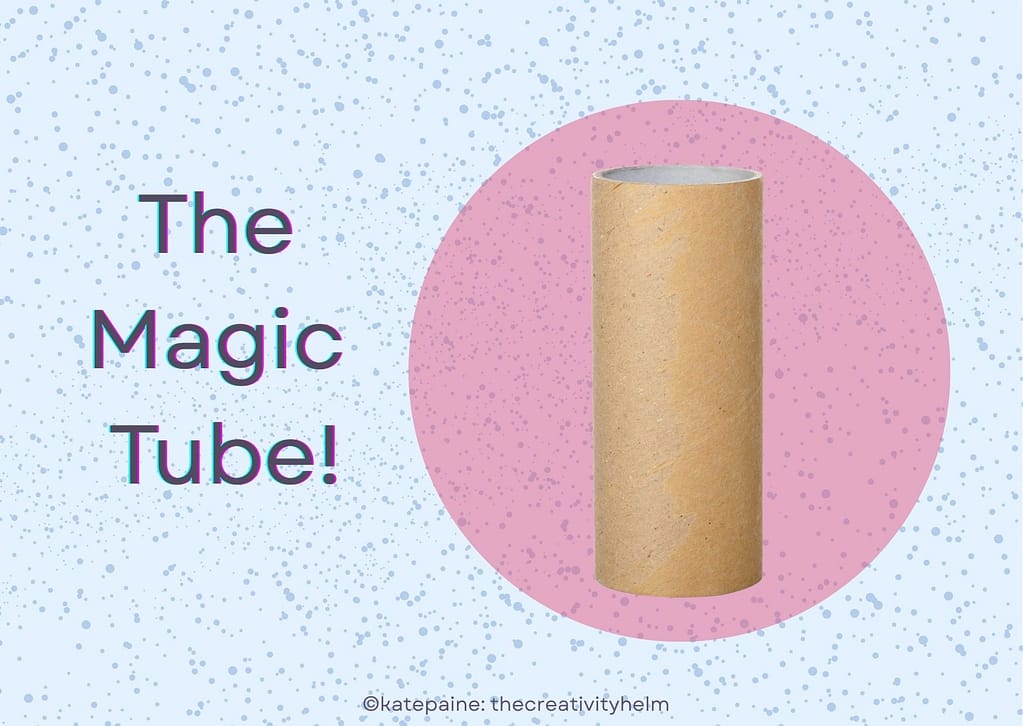
A year ago I had a brainwave 🧠 I needed something to help my music students learn how to be strategic when practicing, instead of just playing or singing from beginning to end, over and over again. Ladies and Gentlemen, I present to you…the Magic Tube! Hold it up to one eye and you can isolate the bit of music you need to work on next. The same goes for anything creative: finding a way to zoom in or find a different view is really magic.
Little kids, it turns out, are able to recognise distinct emotions such as fear in music. So, what if music could offer us grownups the same unique track to emotional recognition that apparently works with little kids? And what if it could help us bypass our usual analytical and highly critical filters and that inner critic that often shuts down creative expression before it can even get started?
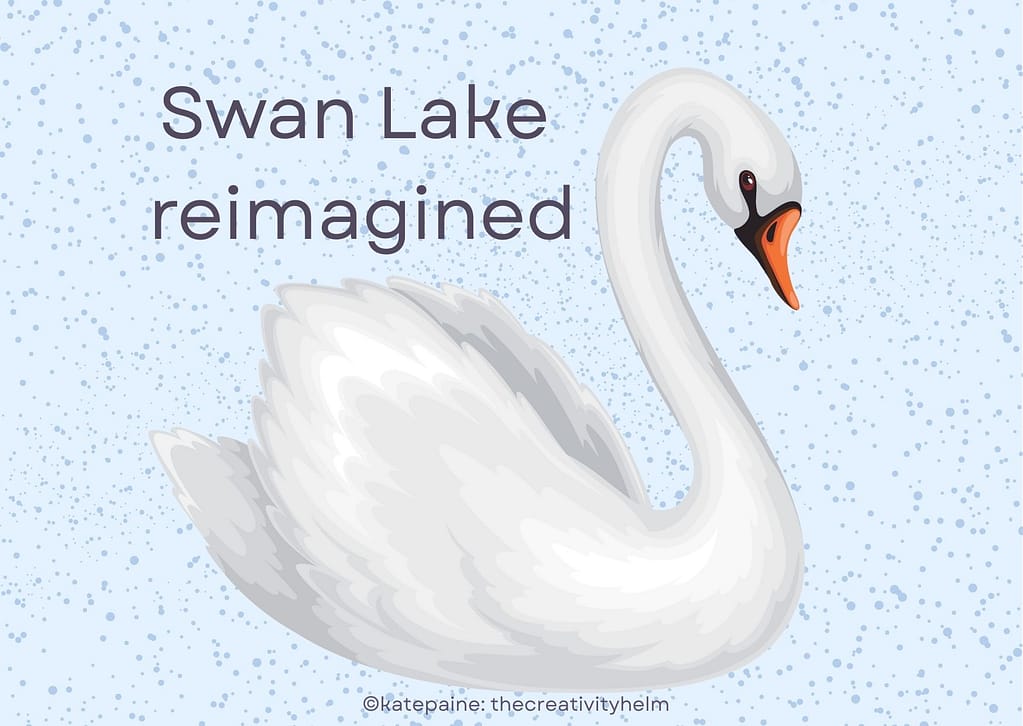
Hello, I’ve only gone and reimagined a tiny, tiny snippet of the main theme of Swan Lake for piano 🦢 Is it derivative or is it original? Or does it just not matter, because, when it comes to creativity, you should be able to do what you damn well please.
After all, creativity is all about experimenting and exploring, and seeing what you can do with something that already exists is, in my opinion, a fine way to do this. Clink on this link to listen! 🎵
Every time I go swimming in the lake near our house it’s a different experience. The light, temperature, colour of the water, patterns on the surface, waves, ducks, people, boats, sky…It’s the same when I sing or play piano. It will never be exactly the same.
And the same goes for anything creative, and just part of being human, right? The creative work will shift, just as we do.
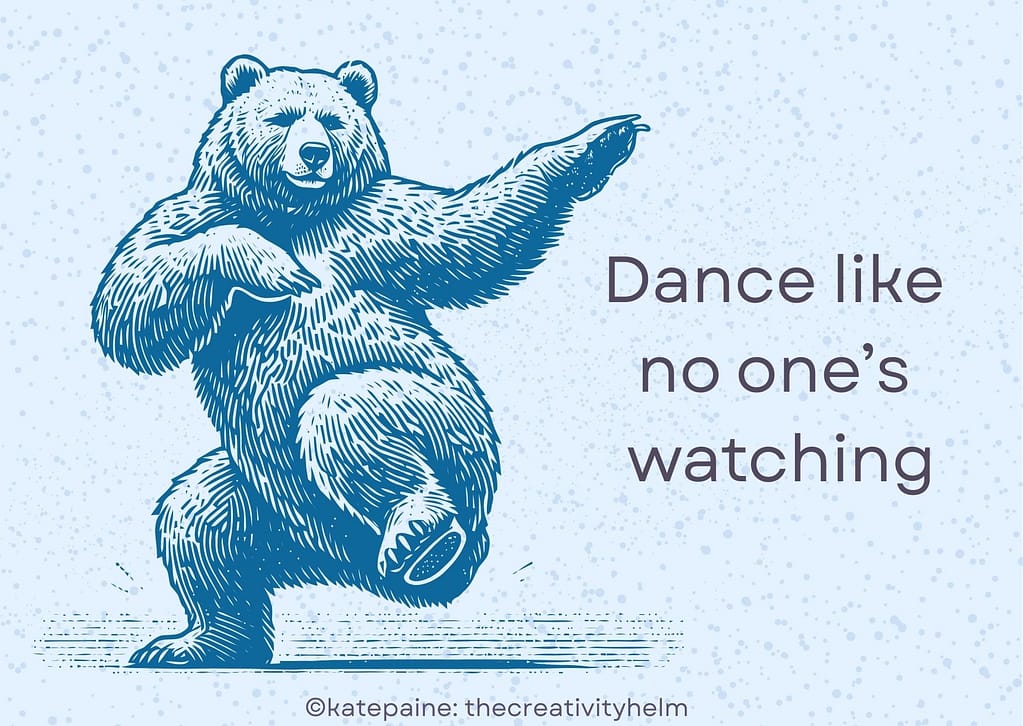
When my daughter was three her she’d dance wildly on the rug in our living room. Clutching a bear in each hand, aa spare stuffed down the front of her tutu, she’d jump up and down, arms (and bears) waving. I’d join her, the two of us grooving to the beat, the effect lingering on, a feeling of something having been cracked open. Because when you move for the sheer pleasure of it you unlock a part of yourself that doesn’t always get enough airtime and is entirely creative.
When I was a kid we had one of those ping pong tables that folded up so you could play by yourself.Exactly the kind of relaxed and unfocused activity that gives your brain a rest while sneakily opening the door to a different kind of thinking. It’s a weird combination of disengagement and engagement at the same time, and the perfect environment for boosting a little creative thinking. What’s your ping pong alternative?
My first piano lesson, my father and I rocked up to the local Catholic convent to meet my teacher. One hundred years old, at least! Long black habit. Ruler in hand to rap my knuckles every time I made a mistake…you get the picture. I soon changed teachers, but, these days, I don’t regret those first lessons. They were the start of a lifelong creative journey… creativity! it’s not just for kids 😉
Hey hey, in this week’s Creativity Helm newsletter, I talk about black holes and compare creativity to an event horizon…
To find out what they have in common, follow this link ⚫️
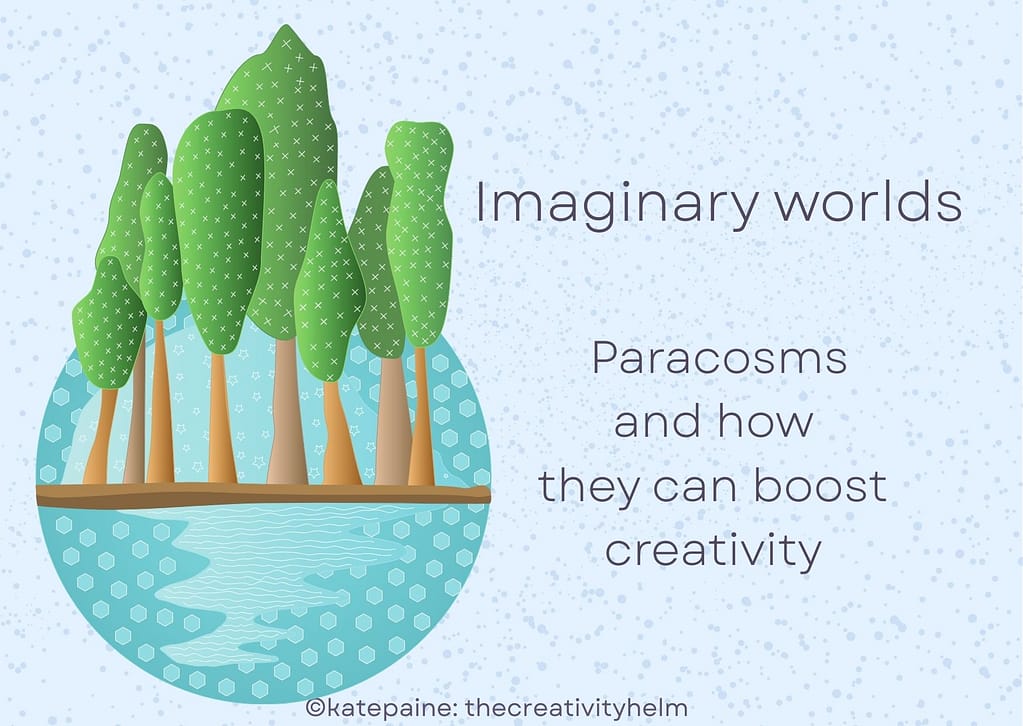
Do you think imaginative play belongs to children, and that most of us grow out of it?
I don’t think that’s true.
It’s just that we learn to call it something else: design, storytelling, art, dance, coding, music, even strategy and problem-solving. Creativity, in other words.
We’re hardwired to seek patterns and predict outcomes. We love certainty and what we know, and we want to get things right and not make mistakes. But creativity lives in that exact space of not knowing what comes next, of having to make a choice instead of following in someone else’s footsteps, of being your own beautiful, creative self 👣
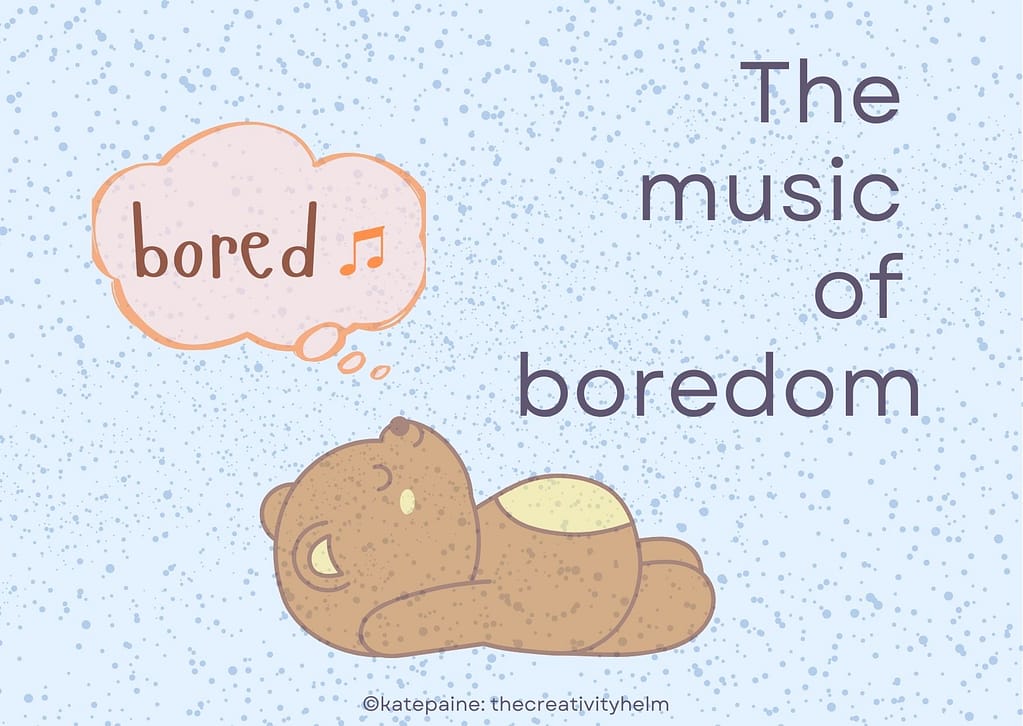
Do you remember how it felt to be bored when you were a kid? Absolutely nothing to do except weave strands of grass or stare at the clouds. But these days? It’s a different kind of boredom, with too much stimulation, no space for our brains to even think of wandering…but what if music can provide a path out of this and back into ourselves? and make space in our heads for creative thinking?🎵
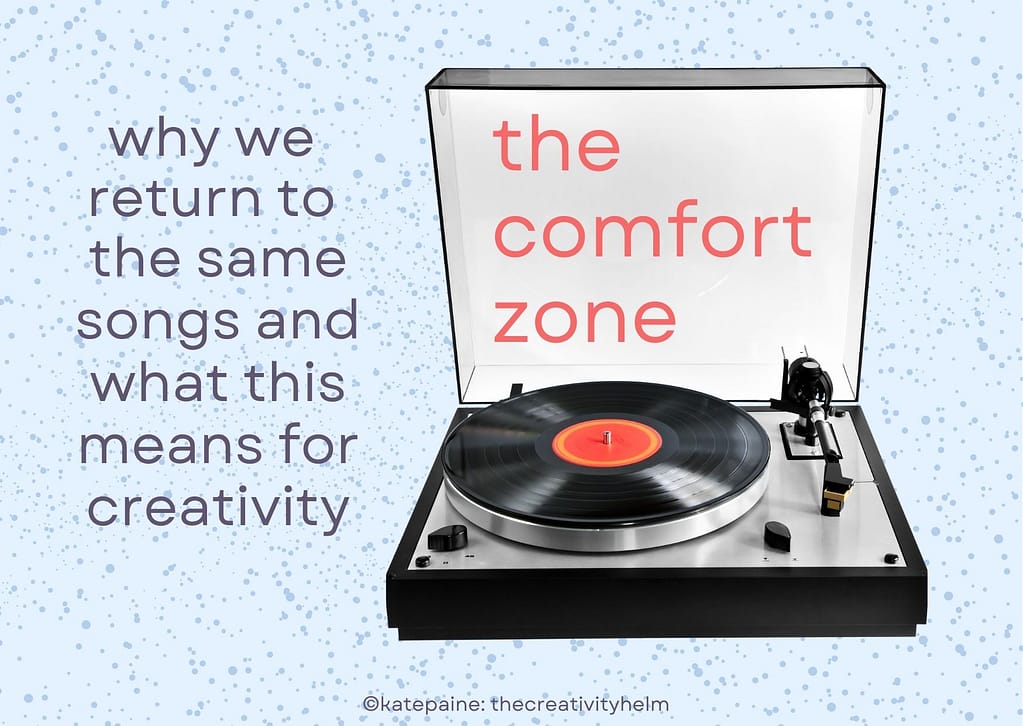
I like to listen to the same songs over and over again (and again 😉). It’s a natural human inclination to stick with what we know and love. Plus, songs can be like mini time machines, transporting us back to who we were when we were listening to them the first time round. But what if the same part of us that says, ‘I don’t want to listen to that’, is surprisingly close to the part that thinks, ‘That’s not really my thing’ or ‘I could never do that’, when faced with new creative possibilities? 🤔
My newsletter is all about what it actually means to be creative (and how to do it). I use simple music principles to highlight how creativity is just part of who we are as humans (and not AI robot overlords).
This week, though, it’s all about music, with not a single mention of creativity. Although I do use another C word, and that’s CLASSICAL music.
Are you going to hunt for Easter eggs this weekend? 🐣 Why not create some of your own instead (and not made of chocolate)? It can be so satisfying to catch a glimpse of an Easter egg in the form of an image or word or sly joke in a movie or game. But trying to do it yourself is a great way to get started with being creative, and I have some suggestions for how to get started.